
Central Ohio Real Estate Market Update: What Sellers Need to Know | May 2026
Central Ohio entered the spring 2026 market with more homes for sale than the year before, but buyer activity was also strong. Across the 16 suburban zip codes included in this report, April brought 927 pending contracts, 630 closed sales and just 1.2 months of inventory.
If you were considering selling at that point in the year, the numbers were encouraging. But the bigger story wasn't simply that it was a seller's market. Buyers were still paying close attention to price, condition and value, which meant sellers had an advantage, but they still needed to use it wisely.
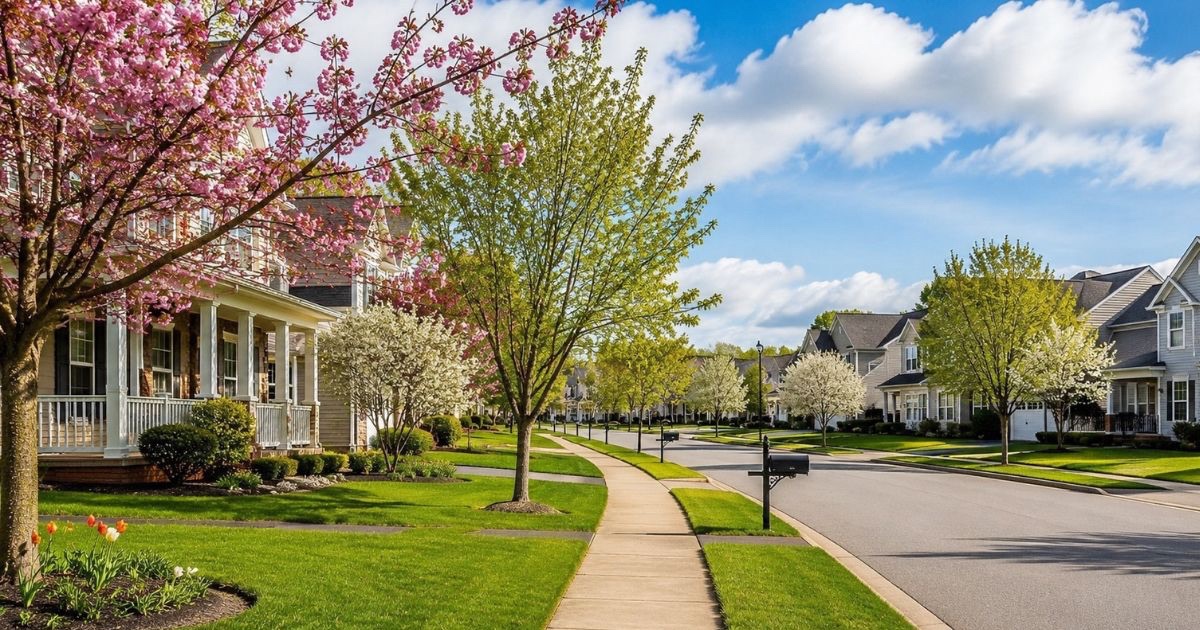
Central Ohio housing market snapshot, spring 2026.
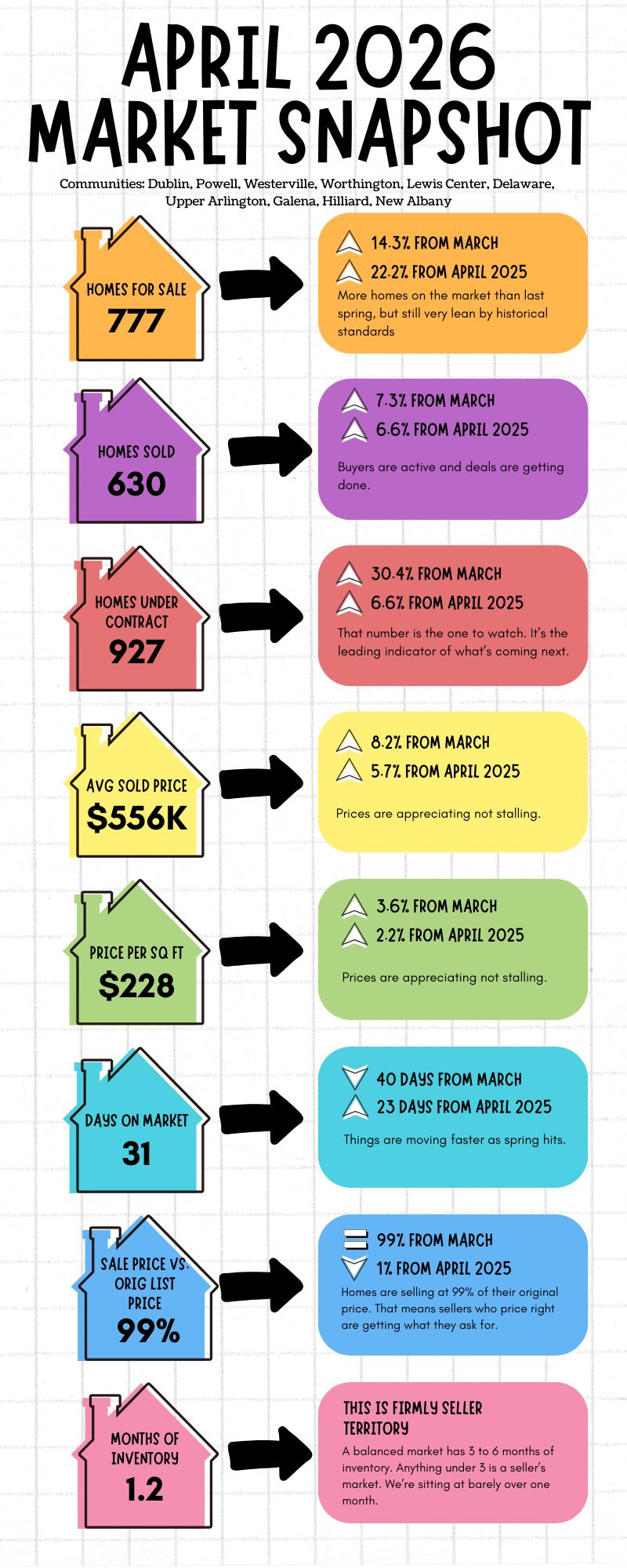
April 2026 data showed a strong Central Ohio seller's market. Inventory remained low at 1.2 months, pending contracts increased sharply from both March 2026 and April 2025, and the average sold price reached $556,000 across the communities studied. At the same time, homes averaged 31 days on market and sold for about 99% of their original asking price, a reminder that strong demand didn't make pricing and preparation any less important.
- What did the spring 2026 numbers show?
- What did those numbers actually mean for sellers?
- Was Central Ohio still a seller's market?
- What did the data tell us about pricing?
- What did sellers need to consider about their next move?
- How did mortgage rates fit into the decision?
- Did every Central Ohio community behave the same way?
- What was the bottom line for sellers?
What Did the Spring 2026 Numbers Show?
This report looks at April 2026 activity across 16 Central Ohio suburban zip codes, including areas in Dublin, Powell, Westerville, Lewis Center, Worthington, New Albany, Upper Arlington, Hilliard, Delaware and Galena.
| Market Measure | April 2026 | What Changed |
|---|---|---|
| Homes for Sale | 777 | Up 14.3% from March and 22.2% from April 2025 |
| Closed Sales | 630 | Up 7.3% from March and 6.6% year over year |
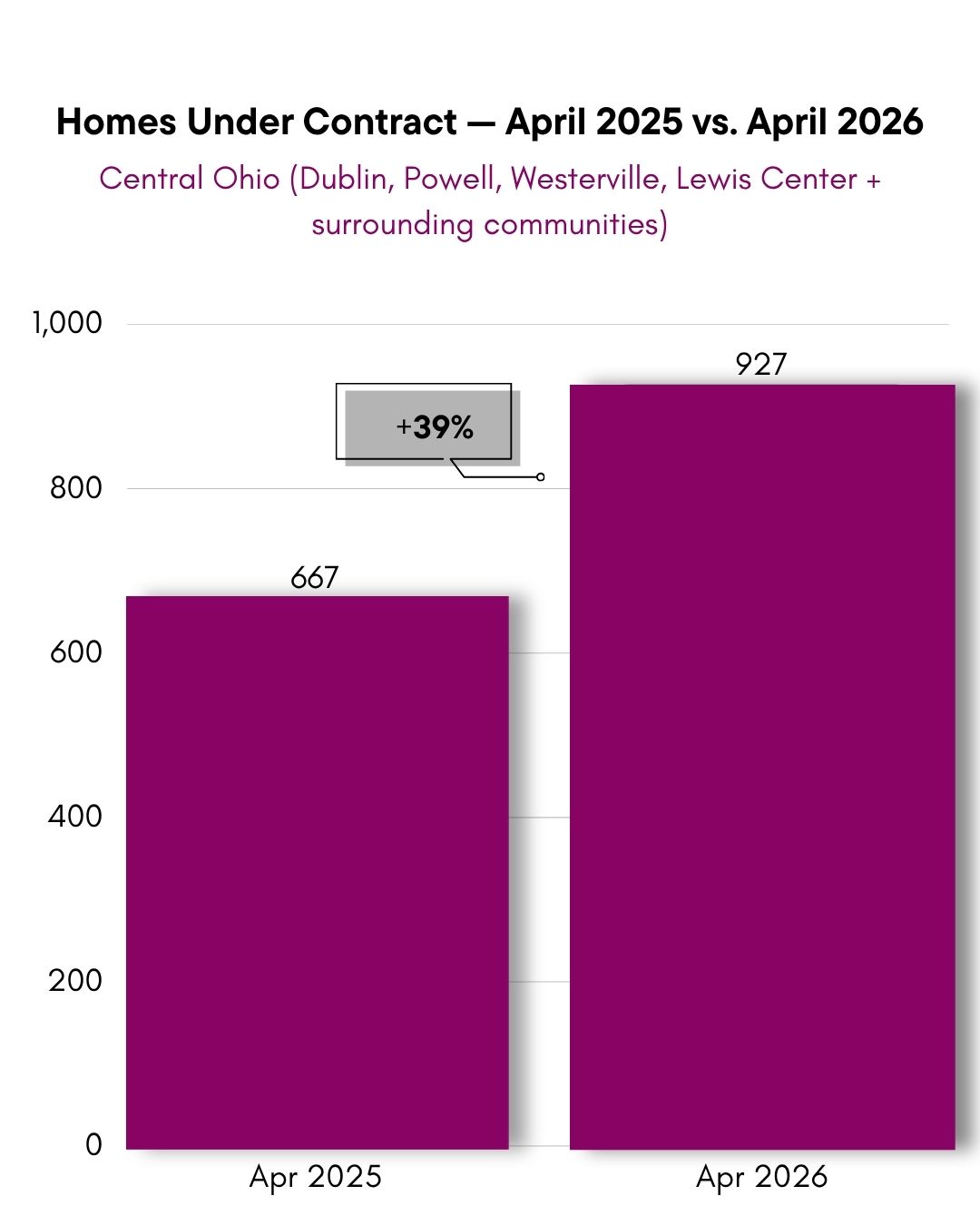
| Pending Contracts | 927 | Up 30.4% from March and 39% year over year |
| Average Sold Price | $556,000 | Up 8.2% from March and 5.7% year over year |
| Price Per Square Foot | $228 | Up 3.6% from March and 2.2% year over year |
| Average Days on Market | 31 days | Down from 40 days in March |
| Sale Price vs. Original List Price | 99% | Homes were closing close to their original asking prices overall |
| Months of Inventory | 1.2 months | Still a low level of available inventory |
The market had more listings than the year before, but buyers were absorbing that inventory quickly. Nearly 1,000 homes went under contract during April across these communities. That gave well-positioned sellers an advantage, but it didn't mean buyers would overlook price or condition.
What Did Those Numbers Actually Mean for Sellers?
Real estate statistics are only useful if they help you make a decision. The 927 pending contracts were especially important because pending sales represent buyers who had already chosen a property and entered into a contract. That was a strong sign of spring buyer activity.
The 99% sale-to-original-list-price figure also deserves some context. It doesn't mean every seller received 99% of whatever number they chose to put on the home. It means that, across the sales included in the data, the average closing price was about 99% of the original asking price.
That's a very different message from saying sellers could price anywhere they wanted. In fact, the strength of the market made good pricing even more valuable because a home that looked like a strong value had an opportunity to attract several interested buyers at the same time.
If you're trying to understand how that pricing decision works, read how to price your Central Ohio home correctly.
Was Central Ohio Still a Seller's Market?
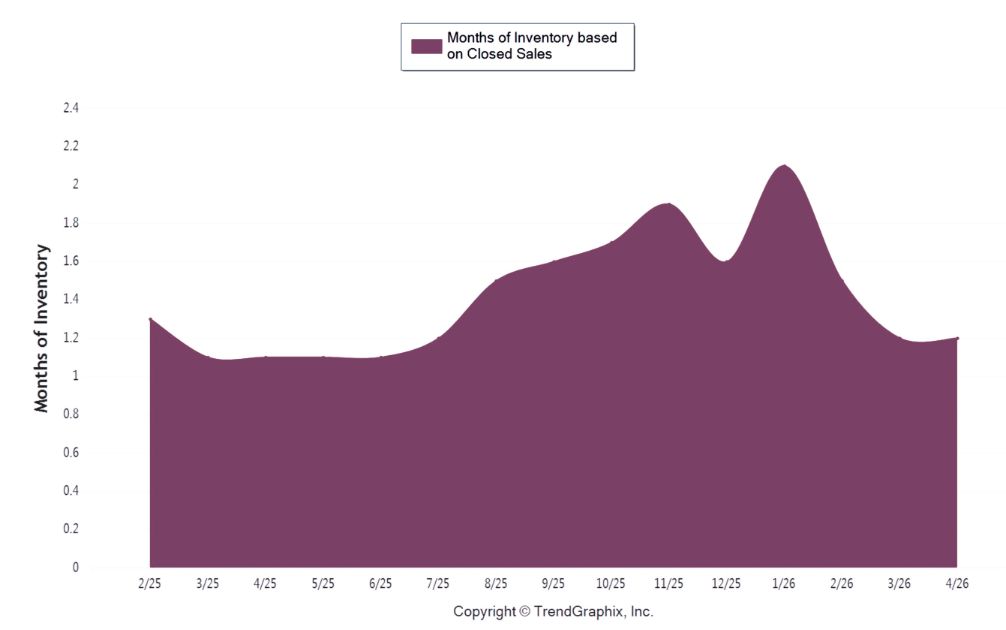
At 1.2 months of inventory, these communities were firmly on the low-inventory side of the market in April 2026. In simple terms, there weren't many homes available compared with the pace at which buyers were purchasing them.
But a seller's market doesn't mean every home sells immediately or receives multiple offers. Buyers still compare one home with another. Price range matters. Condition matters. Location matters. The competing homes available during the week you list matter too.
That's why I pay particular attention to what happens immediately after a home goes live. The activity during the first 10 days on market can tell us a great deal about how buyers are responding to the home's price and presentation.
What Did the Data Tell Us About Pricing?
The market was strong, but it wasn't a blank check for sellers. Buyers had more listings to choose from than they did the year before, and that meant the homes that stood out were usually the ones that made sense when buyers compared price, condition and location.
A seller might reasonably think, "If demand is this strong, why not start a little high and see what happens?" The risk is that buyers don't always respond to an overpriced home by making a lower offer. Sometimes they simply choose another property.
Once a listing has been available for several weeks, reducing the price may create new interest, but it doesn't completely recreate the attention a home received when it first entered the market.
I've written more about this in what overpricing a home can actually cost sellers.
A strong market gives sellers leverage, but the leverage comes from buyer interest. The pricing strategy should help create that interest, not become something the listing has to overcome.
What Did Sellers Need to Consider About Their Next Move?
For many homeowners in spring 2026, selling wasn't the difficult part of the decision. The harder question was what happened afterward.
If you were moving into a larger or more expensive home, you could benefit from strong demand for the property you were selling, but you also had to consider the price and financing of the home you planned to buy.
If you were downsizing, you may have had significant equity available, but that didn't automatically make the next step simple either. Smaller homes, patio homes and desirable condos can have limited inventory of their own.
That's why I don't believe every seller should follow one rule such as "sell first" or "buy first." The better approach is to look at your equity, mortgage, timing, tolerance for risk and the availability of the kind of home you want next.
It's also why I encourage homeowners to think beyond just the sale price. Your next move may involve a different community, different property taxes, an HOA, a different commute or a different type of home entirely. Those costs should be part of the decision before the For Sale sign goes in the yard.
How Did Mortgage Rates Fit Into the Decision?
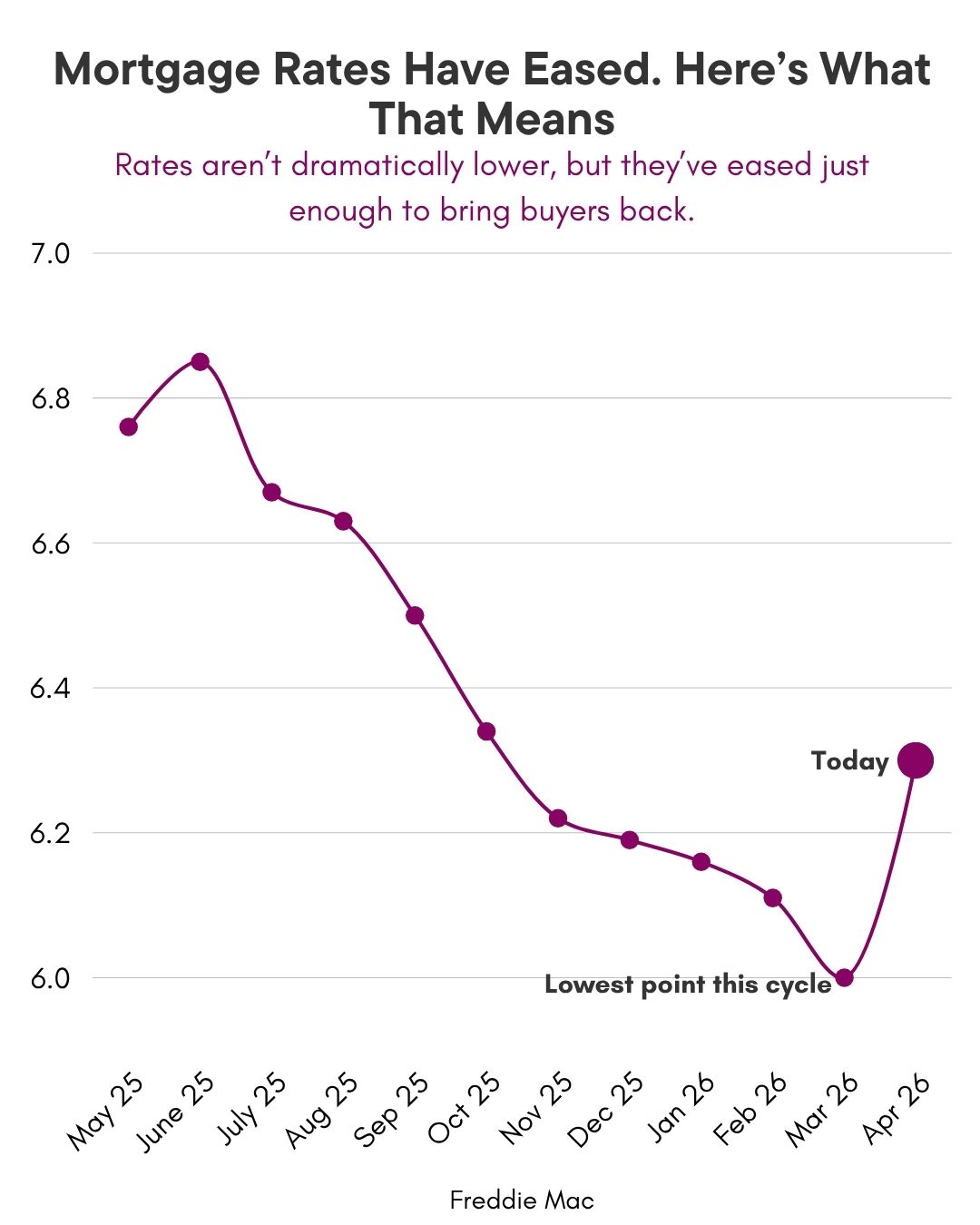
Mortgage rates were running in roughly the mid-6% range in early May 2026 based on the sources used for this report. For homeowners holding mortgages closer to 3% or 4%, that created a very real financial consideration.
It didn't automatically mean moving was a bad decision. It meant the payment on the next home needed to be part of the conversation.
A homeowner could sell for considerably more than they originally paid, move into a less expensive property and still discover that the new monthly payment was closer to the old one than expected because of the interest-rate difference.
Before making that decision, I would rather run the actual numbers than make assumptions based on the rate alone. You can use my mortgage calculator to get a starting point, then compare that with your equity and likely proceeds from the sale.
Did Every Central Ohio Community Behave the Same Way?
No. One of the limitations of any broad Central Ohio market report is that we're combining communities and price ranges that don't always behave the same way.
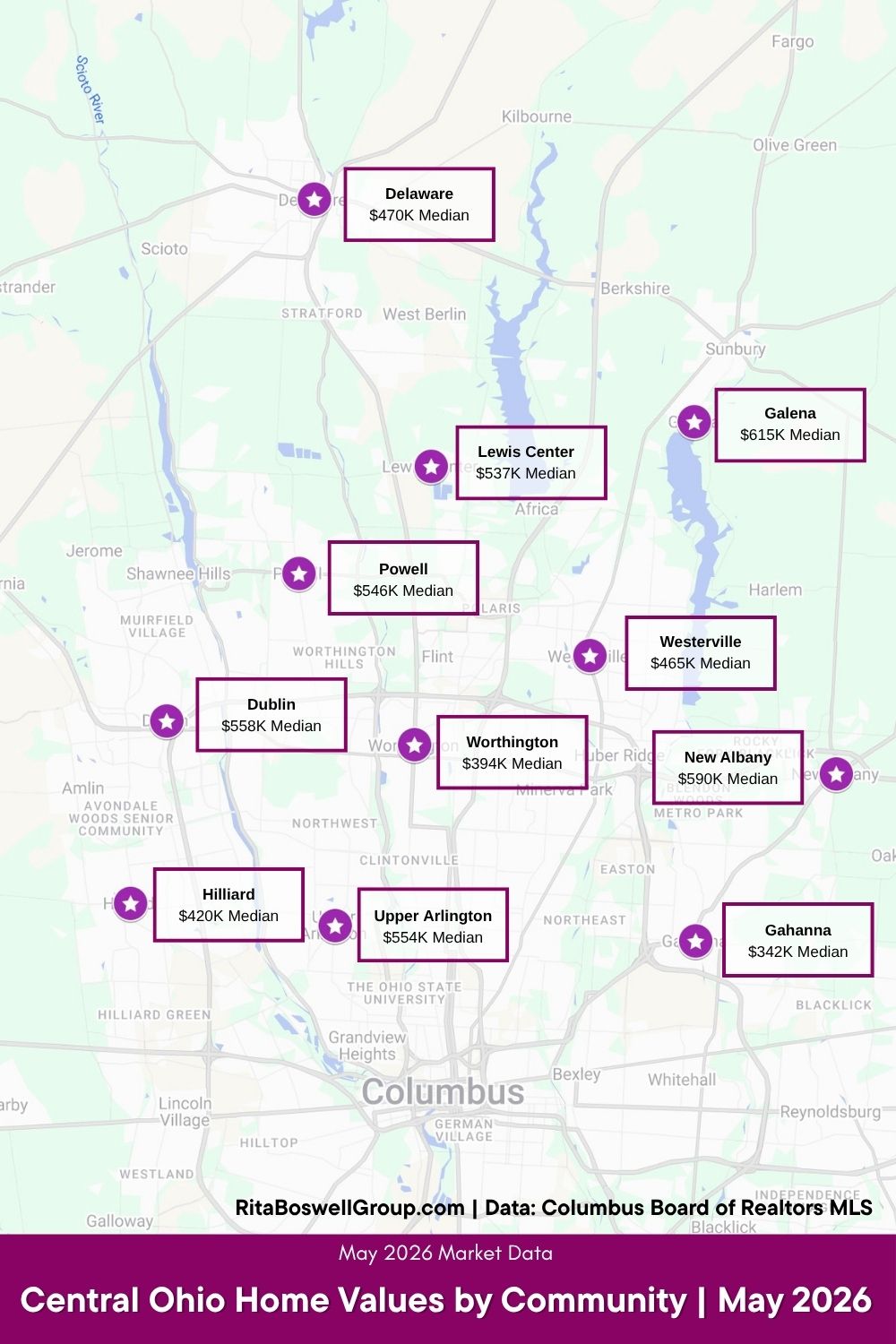
Dublin, Powell, Lewis Center, Westerville, Worthington, New Albany, Upper Arlington, Hilliard, Delaware and Galena can all be experiencing a seller's market while still having very different inventory levels, average prices and buyer pools.
The same is true within a single community. A $400,000 home may have very different competition from an $800,000 home a few miles away.
That's why broad market statistics are useful for understanding direction, but they shouldn't be used by themselves to price an individual home. What matters most is the recent activity around your particular property: comparable sales, current competition, condition, location and how buyers are responding within that price range.
Total Closed Sales: 2,154, up 12.1% from the same period in 2025
Total Pending Contracts: 2,828, up 24.8%
Average Sold Price: $521,000, up 2%
Average Price Per Square Foot: $221, up 0.9%
Average Days on Market: 38 days, compared with 29 days during the same period in 2025
The increase in days on market is a good example of why one statistic shouldn't be viewed in isolation. Homes were taking longer to sell year over year, while closed sales, pending contracts and prices were also higher. The market was changing, but that didn't mean buyer demand had disappeared.
What Was the Bottom Line for Central Ohio Sellers in Spring 2026?
Spring 2026 offered favorable conditions for many Central Ohio sellers. Inventory remained low, buyer contract activity was strong and prices were higher than the year before across the communities included in this analysis.
But I wouldn't take those numbers to mean every homeowner should have rushed to sell. The better question was whether selling made sense for your particular home and, just as importantly, whether the next move made sense.
If you were considering a sale, there were really three numbers worth understanding: what your home could realistically sell for, what you would likely walk away with after the sale, and what the next home would cost you.
Once you have those numbers, the decision usually becomes much clearer.
And when offers do arrive, remember that the biggest number isn't automatically the best choice. There are several other things to consider when deciding whether you should accept the highest offer on your home.
Thinking About Selling Your Central Ohio Home?
If you're considering a move, it's never too early to start looking at the numbers. I'll help you understand where your home fits in the market, what I would recommend doing before you list and how your sale could fit with whatever comes next.
You don't need to have the whole move figured out before we talk. Sometimes that conversation is how you figure it out.
The Front Porch Report
Practical advice, real stories and Central Ohio market insights to help you make smarter selling decisions.
Join the Front Porch ReportOne email every Tuesday. Unsubscribe anytime.
Frequently Asked Questions About the Central Ohio Housing Market in Spring 2026
Was Central Ohio a seller's market in spring 2026?
Were Central Ohio home prices still increasing in spring 2026?
Why were days on market higher year over year if the market was still strong?
Did a seller's market mean I could price my home higher?
Was spring 2026 a good time to downsize in Central Ohio?
How useful are broad Central Ohio market statistics when pricing my home?
Sources used in the original May 2026 market analysis: Columbus Board of Realtors MLS / TrendGraphix, data through April and early May 2026; Freddie Mac Primary Mortgage Market Survey; Bankrate mortgage-rate data; and Columbus Realtors housing reports. Market statistics shown above reflect that period and should not be interpreted as current market data.
Rita Boswell is a Central Ohio real estate agent with Real of Ohio, helping homeowners throughout the Columbus area understand their options, prepare their homes for market and make informed decisions about selling and what comes next.
Representing Central Ohio Homes with Real of Ohio
Categories
Recent Posts




GET MORE INFORMATION