
What Does Pricing a Home Too High Actually Cost Sellers in Dublin and Westerville Ohio?
What Does Pricing a Home Too High Actually Cost Sellers in Dublin and Westerville Ohio?
Most sellers assume they can list a little high, leave room to negotiate, and land where they wanted anyway. In the current Dublin and Westerville market, that logic tends to backfire, and the cost is usually bigger than sellers expect before they go live.
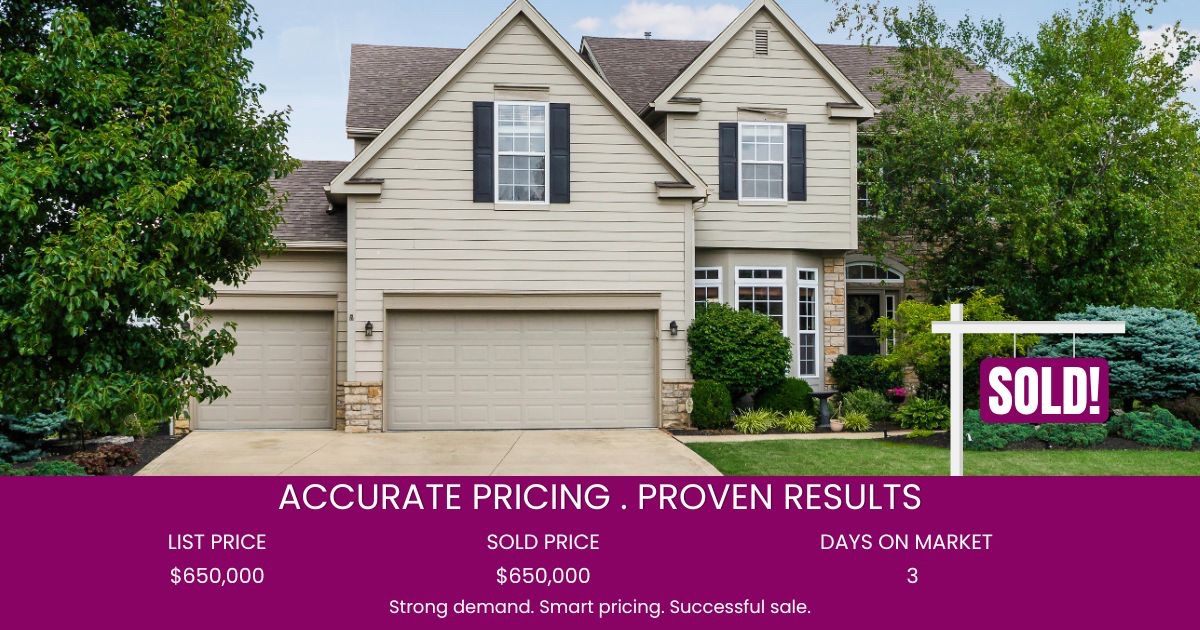
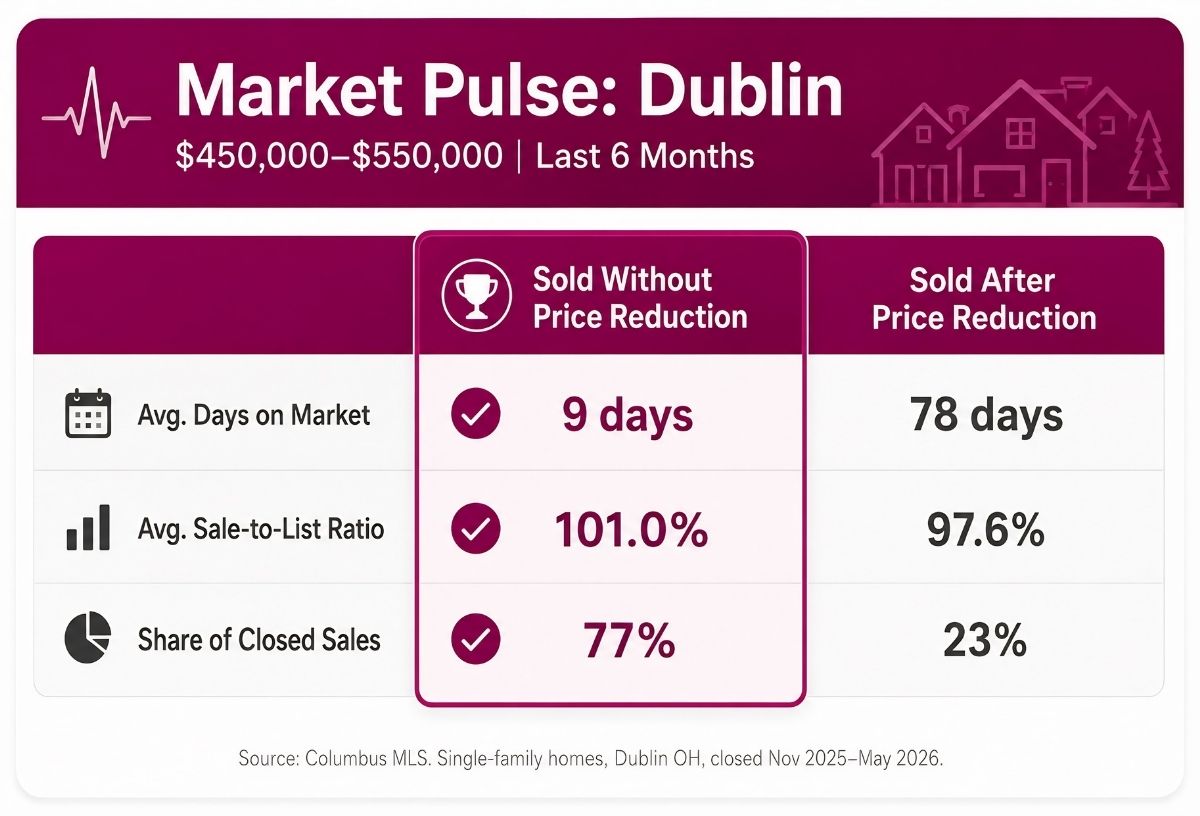
Pricing a home too high in the Dublin, Westerville, and Powell markets typically means fewer showings in the critical first week, a longer time on market, and a final sale price that comes in lower than what accurate pricing would have produced from the start. Dublin MLS data from the last six months shows homes that sold without a price reduction averaged 9 days on market and a 101% sale-to-list ratio. Homes that required a price reduction averaged 78 days on market and a 97.6% sale-to-list ratio. Most of the time, the difference started before the home ever hit the market. It came down to the original pricing decision.
- Why does listing price control who sees your home in the first place?
- What does the Dublin market data actually show about overpricing?
- What does a real overpricing situation look like from start to finish?
- Why does the first week on market matter so much?
- What Do I Tell My Own Sellers About Pricing?
- What's the right way to think about pricing before you list?
Why Does Listing Price Control Who Sees Your Home in the First Place?
Most sellers focus on the negotiation at the end, the back and forth, the counteroffer, the final number. But price is doing something more important much earlier than that. It controls which buyers even see your home when it hits the market.
Buyers shop in price bands. Someone pre-approved for $490,000 is typically searching up to $490,000. They're not browsing at $495,000. So when a seller lists at $495,000 to protect a number they'd accept at $475,000, they've potentially filtered out the exact buyers who would have been most motivated, the ones at the top of their budget, ready to move, looking in that specific range.
The buyers who do see the $495,000 home are budgeted for $495,000 to $520,000. For them, your home is at the bottom of their range. They're comparing it to bigger homes, newer homes, and better-positioned options at the same price. You're not in the right conversation anymore, and that changes everything about how offers come in, or don't.
The goal of pricing isn't to protect a number. It's to put your home in front of the buyers who are most motivated to buy at your home's actual value. Those are two different objectives, and the second one is the one that produces the best outcome.
What Does the Dublin Market Data Actually Show About Overpricing?
The numbers from the Dublin market over the last six months make the cost of overpricing concrete. Among single-family homes in the $450,000 to $550,000 range, homes that sold without a price reduction averaged just 9 days on market and a 101% sale-to-list ratio, meaning they sold for slightly more than list price. Those homes represent 77% of closed sales in that range.
The homes that required a price reduction tell a different story. They averaged 78 days on market and a 97.6% sale-to-list ratio. That's a meaningful difference in both time and net proceeds. And that 78-day average includes the time spent at the original price before the reduction, which means by the time an offer came in, the home had already lost its freshness in the market's eyes.
The sellers who reduced didn't usually make up the difference. Most assumed they could start high, get a feel for the market, and adjust. What they didn't account for is that adjusting after the fact is a fundamentally weaker position than positioning correctly from day one.
The same pattern is showing up throughout Delaware County, including Powell, Lewis Center, and parts of Galena. Buyers are still active, but they're paying close attention to value. Homes that create excitement early continue to perform well. Homes that start too high often spend weeks trying to regain momentum.
What Does a Real Overpricing Situation Look Like From Start to Finish?
A listing in The Overlook in Westerville is a good example of how this plays out. The home was genuinely impressive, stone and stucco, over 5,000 square feet, wooded lot, walk-out lower level, three-car garage. On paper, it had many of the features buyers typically look for in that price range. It came on the market in late October 2024 at $865,000.
After nearly three weeks with no offers, the price dropped to $860,000. A $5,000 reduction on an $865,000 home doesn't change the buyer pool. It doesn't reach new people. It doesn't shift how the market perceives the home. It feels like movement, but the underlying problem hasn't changed.
The home sold in December for $775,000. That's $90,000 below the original list price. By that point, the buyers who would have been most serious early on were gone, some already under contract on other homes. The buyers who engaged later understood the leverage they had, and they used it. The negotiating position had shifted completely, and it shifted because the pricing strategy before launch put the home in the wrong place from the start.
Why Does the First Week on Market Matter So Much?
Every home has a freshness window. It's the period right after launch when buyer interest is highest, when the home shows up as new in searches, when motivated buyers and their agents are paying the most attention. In the Dublin and Westerville market right now, that window is roughly the first seven to ten days.
What happens in that window largely determines the rest of the sale. A home that generates showings and offers in the first week creates competition, and competition gives sellers genuine leverage. A home that sits through that window without activity starts accumulating days on market, and in a market where buyers are watching comps closely, a longer days-on-market number reads as a warning sign. Buyers start wondering what everyone else saw that they didn't.
Price reductions don't reopen the freshness window. They might bring in a new wave of lookers, but those buyers arrive knowing the home has already been passed on. That context shapes the offers they make.

What Do I Tell My Own Sellers About Pricing?
When I'm sitting down with a seller and we're discussing price, I usually tell them the same thing.
We can look at the comparable sales from every angle. We can study the active listings. We can analyze price per square foot, condition, updates, lot size, and competition.
But in the end, a home is worth what a buyer is willing to pay for it.
My goal isn't to convince sellers to list low. My goal is to create enough interest from the right buyers that they feel compelled to act when the home hits the market.
That's where sellers gain leverage.
I've seen sellers leave money on the table by starting too high far more often than I've seen sellers leave money on the table by pricing strategically from the beginning.
A strong pricing strategy isn't about giving your home away. It's about creating enough buyer interest that you have options.
What's the Right Way to Think About Pricing Before You List?
The instinct most sellers bring to pricing conversations is "what's the highest we could list at?" That's understandable, it's your home, and you want to protect the number you've built in your head. But that question leads to a different outcome than the one most sellers are actually after.
The better question is: what price puts this home in front of the most serious, ready buyers right now? That's a positioning question, not a protection question. And in the $450,000 to $550,000 range in Dublin, Powell, and Westerville, those buyers are paying attention. They have good agents, they're watching the comps, and they know when something feels high. When it does, they either skip it or they wait. Neither of those outcomes serves the seller.
A well-priced home that creates real interest in the first week, maybe a couple of strong offers, puts sellers in a position to choose. Pricing is important, but it's only one piece of the puzzle. The condition of the home and how it shows to buyers matter just as much. That's real leverage. It's a much stronger place to negotiate from than sitting at day 30 hoping the right buyer eventually shows up.
Thinking About Selling in Dublin or Westerville?
Selling a home doesn't have to feel overwhelming. If you're wondering where your home would realistically fit in today's market, I'd be happy to share what I'm seeing and walk through the numbers with you.
Whether you're planning to move next month or next year, it's never too early to start the conversation.
Frequently Asked Questions
How much does overpricing a home actually cost sellers in Dublin Ohio?
Based on Columbus MLS data from the last six months, Dublin homes in the $450,000 to $550,000 range that required a price reduction sold at a 97.6% sale-to-list ratio after an average of 78 days on market. Homes priced correctly from the start sold at a 101% sale-to-list ratio in an average of 9 days. On a $500,000 home, that difference in sale-to-list ratio alone represents roughly $17,000, before accounting for the additional carrying costs of 69 extra days on market.
Why do homes that start too high end up selling for less in Central Ohio?
When a home is priced above where serious buyers are searching, it misses its freshness window, the first seven to ten days when buyer interest is highest. By the time a price reduction happens, motivated buyers have moved on to other homes. The buyers who engage after a reduction know the home has been sitting, and that context gives them negotiating leverage they wouldn't have had if the home had been priced correctly at launch.
What price range are buyers most sensitive to in Dublin Ohio right now?
Buyers in the $450,000 to $550,000 range in Dublin, Powell, and Westerville are notably price-sensitive right now. They're working with experienced agents, watching comparable sales closely, and able to identify when a home is priced above market. A home that feels even slightly high in this range tends to get skipped rather than negotiated, buyers simply move on to the next option.
Should I leave room to negotiate when pricing my home in Powell or Dublin?
The negotiating-room strategy tends to backfire in the current Central Ohio market because it filters out the buyers most likely to pay full value. Buyers shop in specific price bands based on their pre-approval, so listing above your target range can mean the most motivated buyers never see your home at all. The sellers who end up in the strongest negotiating position are typically the ones who priced accurately and created competition early, not the ones who left room and hoped for offers.
How long does a home stay "fresh" on the market in Central Ohio?
In the Dublin, Westerville, and Powell markets right now, the freshness window is roughly the first seven to ten days after a home goes live. That's when buyer interest peaks, new listing alerts go out, and motivated buyers are most actively scheduling showings. A home that doesn't generate activity in that window begins accumulating days on market, which buyers and their agents interpret as a signal that something is off, even if the only issue was the original list price.
What's the best way to find the right listing price for my home in Dublin Ohio?
The most reliable starting point is a comparative market analysis from an agent who knows your specific neighborhood and price range. Automated estimates like Zillow don't account for your home's current condition, recent updates, or the specific buyer pool active in your submarket right now. A real CMA built from recent comparable sales in Dublin, Powell, or Westerville will give you a much clearer picture of where to price to attract serious buyers and maximize your final proceeds.
Sources: Columbus MLS. Single-family homes, Dublin OH, closed November 2025, May 2026.
Rita Boswell is a Central Ohio real estate agent with Real of Ohio, helping local buyers and sellers make confident, informed moves throughout Dublin, Westerville, Powell, Delaware County, and the surrounding Columbus area.
Representing Central Ohio Homes with Real of Ohio
Categories
Recent Posts









GET MORE INFORMATION