
What Stays With the House When You Sell in Ohio?
You sell your house, pack your things and take them with you. Simple enough, until you get to the refrigerator. Or the dining room chandelier. Or the TV hanging on the wall.
Here's the short version. In Ohio, things attached to the house generally stay, and things you can pick up and carry out generally go with you. The real answer lives in your purchase contract, though, and the gray areas in between are where sellers and buyers end up surprised.
If there's a light fixture, mirror or appliance you're not ready to part with, it's much easier to sort out before your home is listed than at the final walk-through. I'm happy to help you think it through.

When you sell a house in Ohio, items attached to the home, like light fixtures, ceiling fans, built-in shelving, plumbing fixtures, attached mirrors and blinds, generally stay with the house unless the purchase contract excludes them. Freestanding items like furniture and the TV itself go with the seller. Appliances such as the refrigerator, washer and dryer aren't attached, so whether they stay depends on what the contract says. For gray areas like TV mounts, curtain rods and smart doorbells, the safest approach is to spell out what stays and what goes in writing before the home is listed.
What Counts as a Fixture When You Sell a House in Ohio?
The rule most people hear is simple. If it's attached to the house, it stays. If you can pick it up and carry it away, it goes with you.
That's a helpful starting point. I wouldn't rely on it alone.
Ohio courts have worked from the same basic idea for a long time. The classic case on fixtures, Teaff v. Hewitt, goes back to 1853 and looks at three things: whether the item is physically attached to the home, whether it's adapted to fit that particular home, and whether whoever installed it meant for it to stay. A built-in bookcase checks all three boxes. A freestanding bookshelf checks none of them.
Most real life sits somewhere in between. A chandelier is attached. A refrigerator isn't. Blinds are attached, but curtains may not be. The TV comes off the wall in a minute, while the bracket behind it is screwed into the wall.
That's why I don't like leaving any of this to assumptions. If the seller wants it, exclude it. If the buyer expects it, include it. Put it in writing.
What Usually Stays With the House When You Sell?
The purchase contract most of us use here in Central Ohio lists items that stay with the house unless the contract says otherwise. That generally includes light fixtures and ceiling fans, built-in shelving and cabinetry, plumbing fixtures, attached mirrors, blinds and shades, and other items physically attached to the home.
Even the obvious ones can turn into a problem. Say the chandelier in your dining room came from your grandmother. To you, it's a family piece that's obviously moving with you. A buyer walking through sees a light fixture attached to the ceiling.
Those are two very different expectations.
If you know you want to keep something like that, deal with it before you list. You can exclude it in the contract. In many cases it's even better to replace it before photos and showings so it never becomes a question at all.
Then there are the less obvious things, which are the ones most likely to get overlooked. Curtains versus curtain rods. A garage refrigerator. Shelving in the basement or garage. Outdoor speakers, a basketball hoop, a playset. Even a decorative mirror can raise questions depending on how it's hung.
Do TV Mounts Stay With the House?
This one comes up quite a bit.
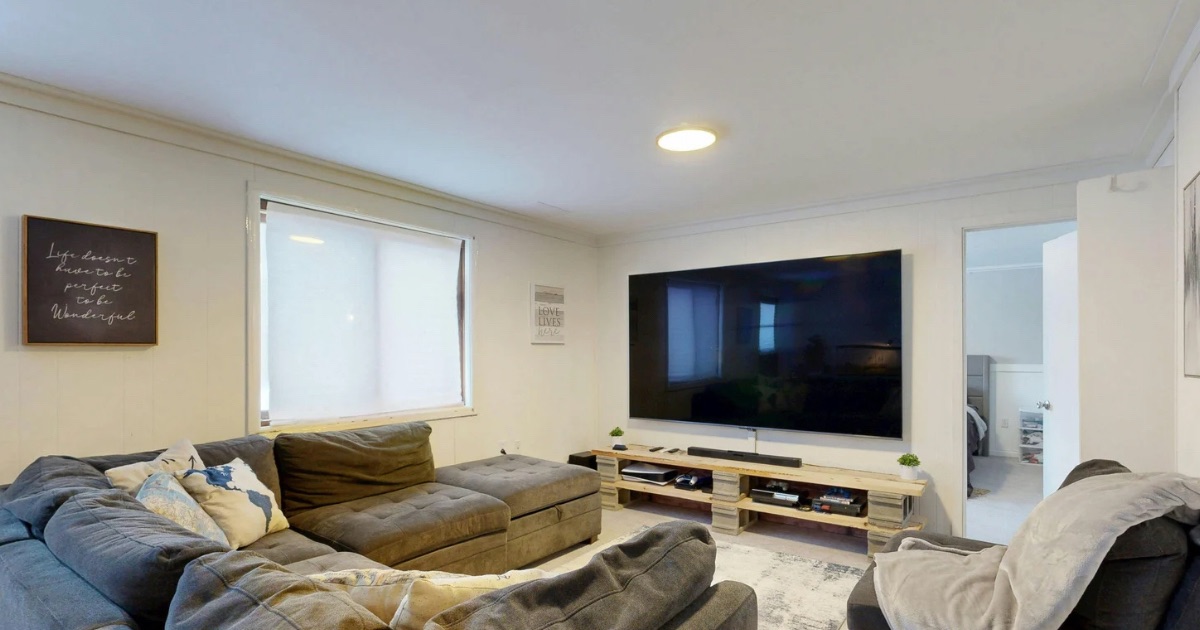
The television itself is personal property, so it goes with you. The mounting bracket is a different story. It's bolted into the wall, which puts it much closer to fixture territory, and most buyers will expect it to stay. If you're taking the TV and leaving the mount, everyone should understand that.
If you're planning to take the mount too, that's another conversation. Removing it can leave holes or damage a buyer wasn't expecting, so plan to patch and paint, and make sure the contract reflects it.
This is a good example of why "I'll just take it when we move" isn't always as simple as it sounds.
Does the Refrigerator Stay When You Sell a House?
Don't assume it does.
Refrigerators, washers and dryers aren't attached to the home the way your kitchen cabinets are. Whether they stay should be spelled out in the purchase contract, not left to a default.
If the buyer wants them included, that becomes part of the offer. If you already know you're taking them, we can make that clear from the beginning, before a buyer starts picturing their groceries in your refrigerator.
Built-in appliances are a different category. A dishwasher or wall oven that's installed into the cabinetry generally stays with the house, the same way the cabinets do.
If it's attached to the house, assume the buyer expects it to stay. If it isn't attached, don't assume anything either way. Anything you plan to take, or plan to leave, should be in writing before your home goes on the market, not sorted out at the final walk-through.
What About Smart Doorbells, Thermostats and Leased Equipment?
Two categories deserve a little extra attention.
The first is smart devices. A video doorbell, smart thermostat or mounted security camera is wired in or attached, so buyers generally expect it to stay unless you exclude it. Leaving it is only half of it, though. You'll want to remove it from your accounts and reset it, so the buyer isn't moving in with a device they can't use.
The second is leased equipment. Water softeners, security systems and propane tanks are sometimes leased rather than owned. A leased item isn't yours to leave behind, and it usually means a call to the company before closing to find out what the agreement requires. It's much easier to sort out early than to discover late.
How Do You Keep Something You Don't Want to Leave Behind?
Here's the simplest way I know to handle it.
Before you list, walk through your house and look at anything attached to a wall, ceiling, cabinet or the property itself. Then ask yourself one question:
"Would I be upset if I had to leave this behind?"
If the answer is yes, put it on your list. Also note anything you lease rather than own.
From there, each item gets one of three answers. Remove it before listing. Replace it with something you're comfortable leaving. Or specifically exclude it from the sale.
If you're downsizing, this list tends to be longer and more personal. That's normal. If the bigger question is how to sort through a whole house, here's how I'd approach downsizing without feeling overwhelmed.
You don't need to walk around your house wondering whether every item technically counts as a fixture. That's what I'm here to sort through with you. Before I list a home, I'd much rather identify these things and set clear expectations, the same way I'd rather talk through what you have to disclose when selling a home in Ohio up front, than have a buyer ask at the final walk-through why something is missing.
A five-minute conversation before you list can prevent a surprisingly frustrating one later.

The Front Porch Report
Practical advice, real stories and Central Ohio market insights to help you make smarter selling decisions.
Subscribe to The Front Porch ReportThinking About Selling in Central Ohio?
There are a lot of small details in a home sale that most homeowners wouldn't know to think about. You shouldn't have to. That's part of what I walk through with my sellers before the house ever hits the market, so we can deal with questions early instead of finding surprises later.
If you're thinking about selling in the next year, I'm happy to talk through what you should be doing now and what can wait.
Frequently Asked Questions About What Stays With the House
What is considered a fixture when you sell a house in Ohio?
A fixture is an item attached to the home in a way that makes it part of the property, such as light fixtures, ceiling fans, built-in shelving, plumbing fixtures, attached mirrors and blinds. In Ohio, fixtures generally stay with the house unless the purchase contract excludes them. Freestanding items like furniture and televisions are personal property and generally go with the seller.
Do TV mounts stay with the house when you sell?
The television is personal property and goes with the seller, but a mounting bracket that is bolted into the wall is usually treated as part of the house. If you plan to take the mount, exclude it in the purchase contract and plan to patch and paint the wall. Agreeing on it in writing prevents a surprise at the final walk-through.
Does the refrigerator stay with the house in Ohio?
Not automatically. Refrigerators, washers and dryers are not attached to the home, so whether they stay is decided by the purchase contract. If a buyer wants them, they are included in the offer, and if the seller plans to take them, that should be clear from the start.
Do curtains and curtain rods stay with the house?
Curtain rods and hardware are attached to the wall and generally stay, while the curtains themselves are often treated as personal property. Because this is one of the most common gray areas, it is best to state in the purchase contract whether curtains are included.
Does a Ring doorbell or smart thermostat stay with the house?
Smart devices that are wired in or attached, like video doorbells, smart thermostats and mounted cameras, are generally expected to stay unless the seller excludes them. If they stay, the seller should remove them from their accounts and reset them before closing so the buyer can actually use them.
Can a seller take a chandelier or light fixture when they move?
Yes, but only if it is excluded in the purchase contract or replaced before the home is listed. Light fixtures are generally considered part of the house, so a buyer will expect the one they saw during showings. Swapping a family piece out before photos is often the cleanest way to handle it.
This article is general information, not legal advice. Your signed purchase contract controls what stays with the house. For a specific legal question, talk with an Ohio real estate attorney. Source: Teaff v. Hewitt, Ohio Supreme Court (1853).
Rita Boswell is a Dublin-based Realtor with Real of Ohio who helps move-up and downsizing homeowners sell in Powell, Dublin, Westerville, Lewis Center and Columbus's northern suburbs.
Representing Central Ohio Homes with Real of Ohio
Categories
Recent Posts









GET MORE INFORMATION