
Do You Have to Pay the Buyer's Agent When Selling Your Home in Ohio?
No. When selling your home in Ohio, you are not required to pay the buyer's agent. Buyer broker compensation is negotiable, and you have options for how it is handled.
However, deciding not to pay it doesn't necessarily mean you'll walk away with more money. Buyers look at the total cost of purchasing a home, and that includes any compensation they may be responsible for paying their agent.
The better question is how buyer broker compensation fits into your pricing strategy and what you can reasonably expect to net from the sale.
Ohio sellers can choose whether to offer buyer broker compensation. Buyers may also request that compensation as part of their purchase offer. The seller can accept, reject, or negotiate the request. What matters is evaluating the entire offer, including the purchase price, compensation, concessions, and estimated seller net.
Planning to Sell? Start Here
Before deciding how to handle buyer broker compensation, it helps to understand your home's current market value and estimated selling costs.
Get Your Home Value Let's Talk About Selling
How Does Buyer Broker Compensation Work in Ohio?
When a buyer works with a real estate agent, they generally enter into a written buyer agreement that explains the services being provided and the compensation the buyer has agreed to.
That compensation can be paid by the buyer, the seller, or through an arrangement between the real estate brokers, depending on the agreements and terms of the transaction.
The seller is not automatically responsible for paying the buyer's agent. However, a buyer can request seller-paid compensation as part of their purchase offer.
For example, a buyer might submit an offer of $500,000 and ask the seller to pay a specified amount toward their agent's compensation. The seller can review that request along with the price, financing, inspection terms, closing date, and any other concessions.
Real estate commissions are not set by law, and there is no required commission rate. The amount and payment arrangement are negotiable.
What Does "Minus Commission" Really Mean for a Buyer?
Sometimes a seller will say they're willing to sell for a certain price, but they don't intend to pay the buyer's agent.
That may sound straightforward from the seller's perspective. But the buyer may see the numbers differently.
Let's say the seller wants $450,000 and does not plan to cover buyer broker compensation. If the buyer is responsible for paying their agent under their agreement, that becomes another expense they need to plan for.
Money used for agent compensation may leave less available for the down payment, closing costs, moving expenses, or improvements after closing.
Removing an expense from the seller's side of the transaction doesn't necessarily eliminate it. It may simply move that expense to the buyer's side, where it can affect the offer.
Why Does Buyer Broker Compensation Matter When Comparing Home Sales?
When I prepare a pricing analysis for a Central Ohio home, I review recent sales that are as similar as possible in location, size, age, condition, lot, and features.
Those comparable sales help us understand what buyers have been willing to pay for similar properties.
However, the recorded sale price doesn't tell the entire story.
Some transactions included seller-paid buyer broker compensation, closing cost assistance, or other concessions. Others may have had different arrangements.
If a seller wants the same price as a comparable home but offers less toward the buyer's transaction costs, the buyer may view those two homes differently.
Two homes can have similar sale prices while requiring different amounts of cash from the buyer.
This is one reason I look beyond the closed price when evaluating a home. Understanding the terms behind comparable sales, when available, helps us develop a more informed pricing strategy.
For a closer look at that process, read my guide to pricing your home correctly from the beginning.

What Happens If the Seller Chooses Not to Pay the Buyer's Agent?
A seller can decide not to offer buyer broker compensation. That is an option, but it is worth understanding how different buyers may respond.
One buyer may have enough cash available to cover the expense separately. Another may ask the seller to pay it through the purchase agreement. Someone else may adjust their offer because the additional expense changes what they can comfortably afford.
Financing can also affect the situation. A buyer may qualify for the purchase price but have limited cash remaining after the down payment and closing costs.
That doesn't mean a seller should automatically agree to every compensation request. It means the request should be evaluated as part of the complete offer.
The goal is to understand what the transaction leaves you with, not simply which expenses appear on your side of the closing statement.
What Happened in a Real Central Ohio Transaction?
I recently helped a longtime client evaluate a home before it was listed publicly. A mutual friend had connected her with the seller, who was also a licensed real estate agent.
The seller was willing to sell for $454,000 but did not plan to pay a buyer's agent at that price.
My client liked the home, so we took a closer look at the numbers.
The seller had an appraisal near $470,000. However, several of the sales used in that appraisal were newer patio homes with different layouts and smaller lots.
When I compared the property with homes that more closely matched its age, size, and lot, the value appeared closer to $450,000.
That distinction matters. An appraisal is an opinion of value based on the information and comparable sales used at the time. It doesn't guarantee what a buyer will ultimately be willing to pay.
I explain this further in my article about the difference between an appraisal and market value.
If my client paid $454,000 and then paid my compensation separately, her total cost would have been higher than what similar homes appeared to support.
I told her she didn't have to use me if she preferred to work directly with the seller. I didn't want my compensation to be the reason she lost a home that otherwise made sense for her.
After reviewing everything, she decided the total cost didn't make sense.
The property was later listed publicly at $460,000 and went under contract. I don't know the final compensation terms, so I can't say how that transaction was ultimately structured.
What the experience illustrates is that buyers don't evaluate the purchase price in isolation. They consider the full cost of buying the home.
How Does Buyer Broker Compensation Affect Your Net Proceeds?
Your sale price is the number that appears in the purchase contract. Your net proceeds are what remains after your mortgage payoff, closing expenses, commissions, and any negotiated seller costs.
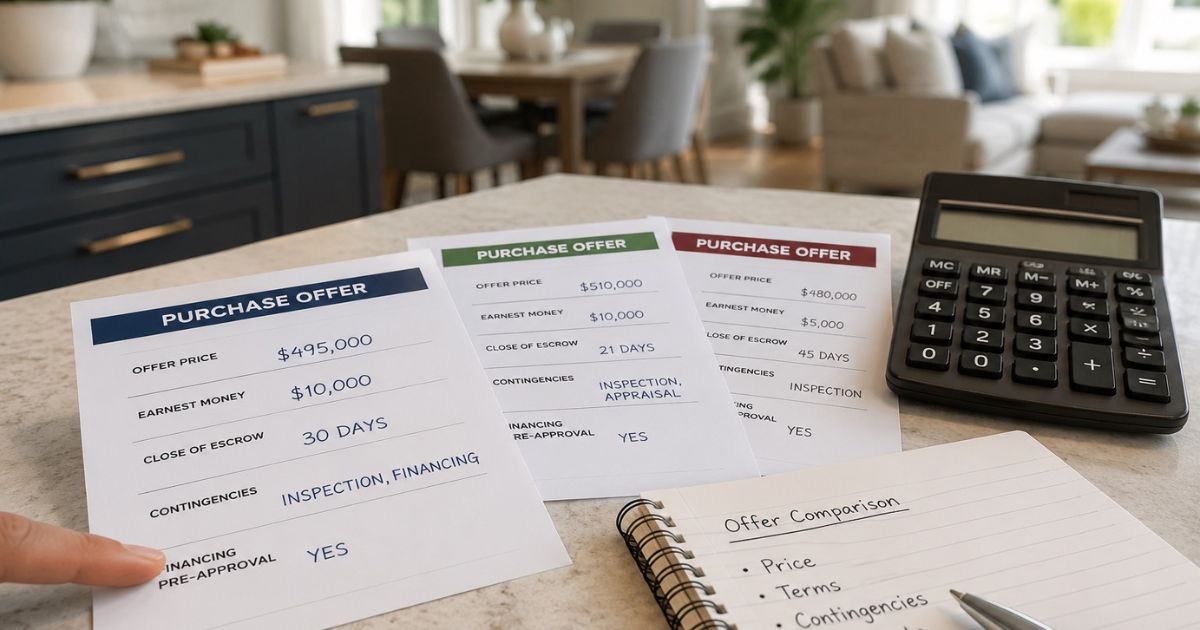
That distinction becomes especially important when comparing offers with different compensation arrangements.
Consider two simplified offers:
Offer A
Purchase Price: $500,000
Seller-Paid Buyer Broker Compensation: $12,500
Seller-Paid Closing Costs: $5,000
Remaining Amount: $482,500
Offer B
Purchase Price: $490,000
Seller-Paid Buyer Broker Compensation: $0
Seller-Paid Closing Costs: $0
Remaining Amount: $490,000
Simplified illustration comparing the listed offer terms only. These figures are not final seller net proceeds and exclude other commissions, mortgage payoff, taxes, title charges, and additional closing expenses.
Offer A has the higher purchase price, but Offer B leaves more money after the particular expenses shown above.
Of course, price and compensation are not the only factors. Financing, appraisal terms, inspection requests, contingencies, and the buyer's ability to close also matter.
For a more complete breakdown, read How Much Will I Actually Net From Selling My Home? It explains the common deductions sellers should account for before deciding whether an offer makes financial sense.
When Should You Decide Whether to Offer Buyer Broker Compensation?
Before your home goes on the market.
Buyer broker compensation belongs in the same conversation as your list price, expected proceeds, property preparation, and possible seller concessions.
When I'm working with a seller, I want them to understand several possible scenarios before we list. We can look at what they may net under different compensation arrangements and how those choices fit the competition in their price range.
Some homes attract buyers with substantial cash available. Others compete in price ranges where an additional out-of-pocket expense may have a greater impact on a buyer's ability to purchase.
We also need to consider how many similar homes are available, how those homes are priced, and what buyers have been willing to pay.
There isn't one answer that works for every seller or every property.
The decision should support your overall selling strategy, not be made separately from it.
Thinking About Selling Your Central Ohio Home?
Before deciding how to handle buyer broker compensation, I can help you understand your home's current market value, review comparable sales, and compare estimated net proceeds under different scenarios.
My goal is to make sure you understand your options before making decisions that affect your sale.
If you're considering selling, it's never too early to start the conversation. Call, text, or email anytime.
The Front Porch Report
Practical advice, real stories and Central Ohio market insights to help you make smarter selling decisions.
Join the Front Porch ReportOne email every Tuesday. Unsubscribe anytime.
Frequently Asked Questions About Buyer Agent Compensation in Ohio
Do I have to pay the buyer's agent when I sell my home in Ohio?
No. Buyer broker compensation is negotiable. A seller can choose whether to offer it, and compensation may also be negotiated through the buyer's purchase offer.
What does "I'll sell for X minus commission" mean for a buyer?
It means the seller's desired price does not include paying the buyer's agent. If the buyer is responsible for that compensation under their buyer agreement, they may need additional money beyond the purchase price and normal closing expenses.
Can a buyer ask the seller to pay their agent?
Yes. A buyer may include a request for buyer broker compensation in the purchase offer. The seller can accept, reject, or negotiate that request along with the other terms of the offer.
Can buyer agent compensation be included in seller concessions?
Seller-paid compensation and concessions can be negotiated as part of a transaction. The specific structure must comply with the purchase agreement, brokerage agreements, and applicable financing requirements.
Will refusing to pay buyer broker compensation help me net more?
Not automatically. You may save that expense, but a buyer could respond with a lower offer or request compensation through the purchase agreement. Your final net depends on the entire offer, including price, concessions, commissions, and other closing costs.
When should I decide whether to offer buyer broker compensation?
Discuss it before your home is listed. Your agent should help you compare possible scenarios and explain how the decision fits your pricing strategy, buyer pool, and estimated proceeds.
This article provides general real estate information and is not legal, lending, or tax advice. Compensation and contract terms are negotiable and can vary by transaction.
Rita Boswell is a Central Ohio real estate agent with Real of Ohio. She helps sellers throughout Delaware County and the Columbus area understand their options and make informed decisions before listing their homes.
Rita Boswell Group | Real of Ohio
Categories
Recent Posts






GET MORE INFORMATION