
Should You Always Accept the Highest Offer on Your Home?
If you're selling your home and more than one offer comes in, it's natural to look at the prices first. But the highest offer and the best offer aren't always the same thing. Sometimes the biggest number comes with enough contingencies, appraisal risk or buyer requests that a slightly lower offer is actually stronger.
The better question isn't simply, "Which buyer offered the most?" It's, "Which offer gives me the best combination of price, net proceeds, terms and likelihood of actually reaching the closing table?"
No. The highest offer isn't automatically the best offer. Price matters, but so do the buyer's financing, appraisal terms, inspection contingency, earnest money, seller-paid expenses, home-sale contingency and closing timeline. The strongest offer is the one that gives you the best overall result with an acceptable level of risk.
Why is an offer about more than price?
An offer is really a package. The purchase price tells you what the buyer is offering to pay. The rest of the contract tells you what has to happen before you actually receive that money.
A high price attached to weak financing, significant seller-paid expenses, a home-sale contingency or substantial appraisal exposure may not be nearly as attractive once you look closely. On the other hand, a slightly lower offer with strong financing and cleaner terms may give you a much clearer path to closing.
This is also why knowing what your home is realistically worth matters before the offers ever arrive. Understanding what your Central Ohio home is really worth gives you important context when you're deciding whether a buyer's offer is strong or simply aggressive.
What should you compare when reviewing offers?
When I'm helping a seller compare offers, I don't simply arrange them from highest price to lowest. I want to know what each offer actually means for the seller.
Purchase price: Of course price matters. It just shouldn't be considered by itself.
Financing: Is the buyer paying cash or obtaining a mortgage? How strong is the buyer's pre-approval? Is there anything about the financing that could make the transaction more difficult?
Seller-paid expenses: Is the buyer asking you to contribute toward closing costs or other expenses? Those requests reduce your proceeds and should be considered when comparing offers.
Earnest money: The amount of earnest money doesn't guarantee that a transaction will close, but it is another piece of the overall offer worth reviewing.
Inspection terms: Almost every seller focuses on price when offers arrive, but inspection terms can become just as important once you're under contract. Look at the length of the inspection period and exactly what rights the buyer has during that time.
Appraisal terms: If the buyer is financing the purchase, what happens if the home doesn't appraise at the contract price?
Other contingencies: Does the buyer have a home to sell? Are there other conditions that have to be satisfied before the transaction can move forward?
Closing and possession: A buyer willing to work with your preferred timing may be more valuable than one whose schedule creates another problem for you.
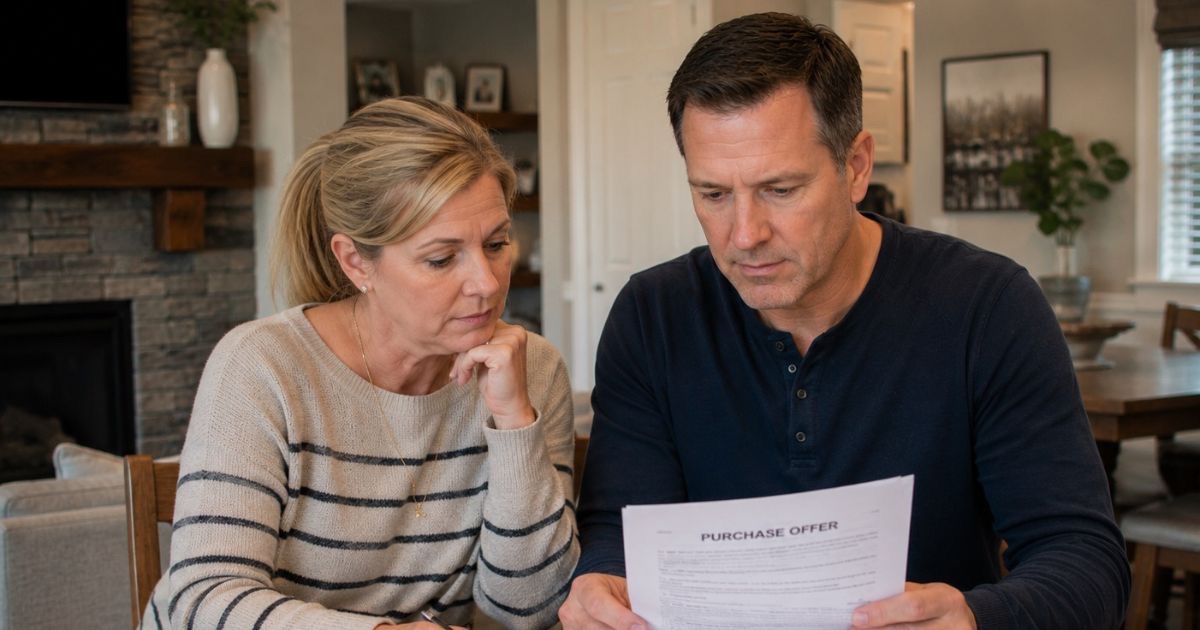
Why does the highest offer not always net you the most?
This is where looking only at the purchase price can be misleading. Consider two simplified offers:
Offer A
$605,000 purchase price
$10,000 toward buyer expenses
Appraisal contingency
Buyer also has a home to sell
Offer B
$595,000 purchase price
No seller-paid buyer expenses
Strong financing
Fewer contingencies
Offer A has the bigger number at the top. But that doesn't automatically make it financially better or more likely to close. You have to compare the complete offers.
The purchase price is only the starting point when you're comparing what you'll actually receive from a sale. Mortgage payoffs, closing costs, commissions, buyer concessions, repair credits and other expenses can all affect the final number. If you want to understand the bigger picture, I break down how much you may actually net when selling your home and the expenses that typically come out of your proceeds at closing.
This is why I like sellers to look at both the likely net proceeds and the amount of risk built into each contract. Sometimes the highest offer still wins after you do that. Other times, a different offer becomes much more attractive.
How does appraisal risk affect an offer?
A buyer can offer any price they want. That doesn't necessarily mean their lender will agree that the home is worth that amount.
If a financed buyer offers substantially more than the recent comparable sales support, you need to understand what happens if the appraisal comes in low. Does the buyer have the cash to cover a difference? Have they agreed to cover some or all of an appraisal gap? Or can they ask you to reduce the price?
This is one reason buyers, sellers and appraisers don't always see a home's value the same way.
It also goes back to your original pricing strategy. A home priced correctly has a better chance of creating real buyer interest without depending on a number that may be difficult to support later. You can read more about how to price your Central Ohio home correctly.
Which contingencies should sellers pay attention to?
A contingency gives the buyer certain rights if a condition of the contract isn't satisfied. That doesn't make contingencies bad. Many are completely normal. But when you're comparing multiple offers, you need to understand how much uncertainty each one creates.
Financing, appraisal and inspection contingencies are common. A home-sale contingency deserves particularly careful consideration because your transaction may now depend on the buyer successfully selling another property.
That doesn't automatically make the offer unacceptable. It simply adds another layer to evaluate. Is their home already listed? Is it under contract? What happens if their sale doesn't happen? The answers can make two seemingly similar offers very different.
Why does a strong first week matter when you're hoping for multiple offers?
The best time to create buyer competition is usually when your home is fresh on the market and receiving the most attention. That's why preparation and pricing before you list matter so much.
Buyers notice a new listing. If the home is positioned well and several buyers become interested at the same time, you may have choices. Once a home has been sitting for a while, recreating that same sense of competition becomes much harder.
You can read more about why the first 10 days on the market matter. It's also why I caution sellers against starting too high just to see what happens. Overpricing can cost you valuable momentum that isn't always easy to get back.
How should you choose the best offer?
When multiple offers come in, give yourself enough time to understand what you're actually choosing between. Price matters, but so do your likely proceeds, financing strength, appraisal exposure, inspection terms, contingencies and timing.
Sometimes the highest offer is absolutely the right one to accept. Sometimes a slightly lower offer gives you a better financial result with fewer opportunities for the transaction to fall apart.
My job is to lay the offers out clearly, explain where I see strengths or potential problems, and give you my opinion. The final decision is always yours. You should be able to make it understanding not just what each buyer is offering, but what accepting that offer could mean between contract and closing.
Don't choose an offer based on the biggest number alone. Compare what you'll likely net, what has to happen before the buyer can close, and how much risk you're accepting along the way. The best offer is the one that makes the most sense for your situation.
Thinking About Selling Your Central Ohio Home?
If you're considering selling, it's never too early to start looking at the numbers and talking through your options. I'll help you understand what your home may be worth, how I would position it in the current market and what you should consider before you're looking at an offer on the table.
The Front Porch Report
Practical advice, real stories and Central Ohio market insights to help you make smarter selling decisions.
Join the Front Porch ReportOne email every Tuesday. Unsubscribe anytime.
Frequently Asked Questions
Should I always accept the highest offer on my house?
No. The highest purchase price isn't automatically the strongest offer. Financing, seller-paid expenses, appraisal terms, inspections, contingencies and timing can all affect how much you ultimately receive and whether the transaction successfully closes.
Why would a seller accept a lower offer?
A seller may choose a lower offer because it has stronger financing, fewer contingencies, no request for seller-paid expenses, better appraisal protection or terms that fit the seller's plans better. The purchase price is only one part of the contract.
What makes one offer stronger than another?
A strong offer usually combines an attractive price with reliable financing, reasonable contingencies and terms that work for the seller. There isn't one set of terms that makes every offer best because the seller's circumstances also matter.
Does earnest money make an offer stronger?
A larger earnest money deposit can demonstrate a buyer's commitment to the transaction, but it shouldn't be evaluated by itself. The contract determines when earnest money may be returned to the buyer or potentially retained, so the complete terms still need to be reviewed.
What happens if a buyer offers more than the home appraises for?
That depends on the contract. The buyer may have agreed to cover an appraisal gap, the parties may renegotiate the purchase price, or the buyer may have certain rights under an appraisal or financing contingency. This is why appraisal terms should be reviewed before accepting an offer rather than waiting until the appraisal is completed.
Is a cash offer always better than a financed offer?
No. Cash removes some financing-related risk, but that doesn't automatically make it the best offer. Price, inspection terms, contingencies, closing timing and other requests still matter. A strong financed offer can sometimes be better for the seller than a lower cash offer.
Rita Boswell is a Central Ohio real estate agent with Real of Ohio, helping homeowners throughout the Columbus area understand their options, prepare their homes for market and make informed decisions from pricing through closing.
Representing Central Ohio Homes with Real of Ohio
Categories
Recent Posts






GET MORE INFORMATION