
First 10 Days on Market: Why They Matter for Central Ohio Sellers
When your home first hits the market, you're getting something you won't get again: a brand-new listing in front of nearly every active buyer looking for a home like yours. That's why I put so much emphasis on getting the pricing, preparation, photography and marketing right before we go live rather than planning to fix things later.
The first 10 days don't guarantee what your home will sell for, and every home and market is different. But they give us valuable information. Strong showing activity, second showings and offers tell us buyers are responding. Very little activity, or plenty of showings without offers, tells us something too. The key is knowing how to read those signals and what to do with them.
The first 10 days matter because that's when your home is new to the market and the largest group of active buyers is likely to see it. Strong early interest can put a seller in a better negotiating position, while a slow start gives us important information about price, condition, presentation or buyer demand. You can't guarantee multiple offers, but you can do a lot before listing to give your home the strongest possible launch.
Why Are the First 10 Days Different?
The biggest advantage you have when your home goes on the market is that it's new. Buyers who have been searching for weeks may have already seen everything else that fits their criteria. Then your home appears.
Those active buyers tend to notice new listings quickly. Their agents see them. Automated property searches send them out. Buyers save them online, compare them to homes they've already toured and decide whether to schedule a showing.
That's why I don't like the idea of putting a home on the market before it's completely ready and fixing things as we go. You may get another weekend, but you don't get another first weekend.
"You may get another weekend, but you don't get another first weekend."
This process really begins before the listing goes live. Understanding what your Central Ohio home is really worth gives us the foundation for deciding how to position it when it reaches the market.
What Are Buyers Paying Attention To?
Buyers aren't necessarily sitting at home studying the days-on-market number every morning. But they do notice whether a listing is new, whether the price has changed and how long it has been available.
A home that's been listed for two days creates a different conversation than one that's been available for several weeks. With the new listing, a buyer may be wondering whether someone else will make an offer first. After several weeks, that urgency can fade and the conversation often becomes more about negotiating.
That's not because there's suddenly something wrong with the house. Buyers simply have more time to think, compare and question their position when they don't feel competition from the market.
This is also why the highest offer isn't automatically the best offer. If a strong launch gives you more than one option, price is only one part of deciding which buyer gives you the best path to closing.
What Does the Delaware County Data Show?
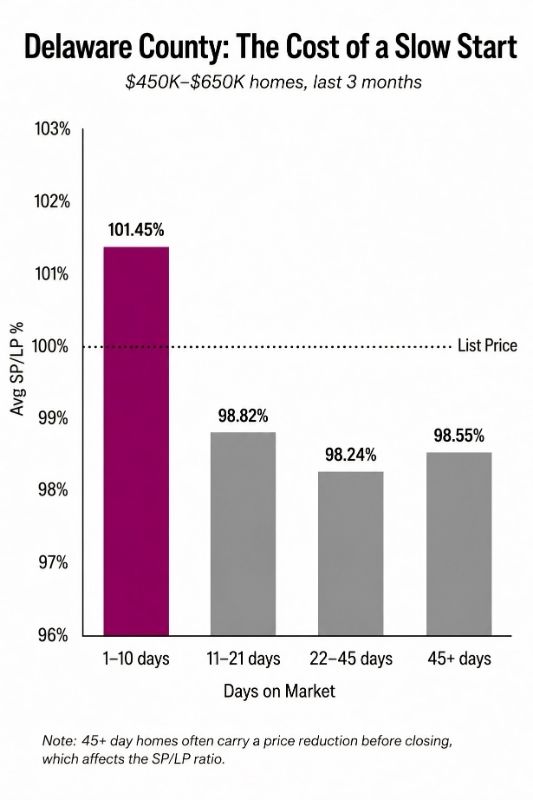
I looked at Delaware County sales in the $450,000 to $650,000 price range over a three-month period. Homes that sold within 1 to 10 days averaged 101.45% of their list price. Homes that took 11 to 21 days averaged 98.82%, while those taking 22 to 45 days averaged 98.24%.
| Days on Market | Average Sale-to-List Price |
|---|---|
| 1–10 days | 101.45% |
| 11–21 days | 98.82% |
| 22–45 days | 98.24% |
| 45+ days | 98.55% |
There's an important distinction here. This doesn't mean selling quickly causes a home to sell for more. The homes selling quickly may also be the ones buyers considered the best combination of condition, location, presentation and price.
And that's really the lesson. Homes that connect with the market early tend to perform differently from homes that don't. Our goal is to put as many of those pieces in place as possible before the listing launches.
What Can Two Similar Homes Teach Us About the First Week?
I saw this play out with two homes in the same Lewis Center neighborhood. One was a four-bedroom home just over 3,000 square feet, priced at $575,000. Before listing, the sellers took care of professional cleaning, some light staging and repainting two darker rooms. We had professional photography completed before it went live.
The home went on the market Thursday. By Sunday evening, we'd had 22 showings. Two offers came in by Monday, and the home ultimately closed above asking.
A similar home nearby came on the market shortly afterward at a comparable price. It was occupied and presented differently. The photography and preparation didn't create the same response from buyers. It remained on the market for 28 days before the sellers adjusted the price and eventually sold.
One example doesn't establish a rule, but I've seen this pattern enough times that I pay close attention to it. Small decisions before listing can have a surprisingly large effect on how buyers respond once the home is available.
It's also why I've written about why some homes sit while similar homes sell. There usually isn't one magic reason. It's often a combination of price, presentation, condition and what buyers have available to them at that particular moment.

What Should Be Done Before Your Home Goes Live?
You don't need to remodel your house to prepare it for the market. In fact, I frequently recommend that sellers not spend money on larger projects that aren't likely to change what a buyer will pay.
The important work is usually much more practical: deciding what needs repaired, decluttering, cleaning, touching up paint where needed, improving lighting, staging the rooms that need help and making sure the photography presents the home properly.
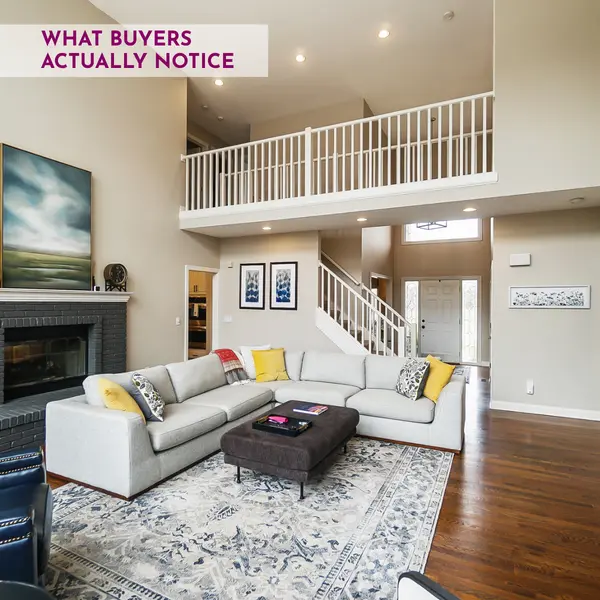
If you're unsure where to spend money, start with my guide to what to fix before listing your home. You may also want to read which improvements buyers actually notice before you sell.
Then comes pricing. I can look at the numbers inside out and upside down, but in the end it's what a buyer is willing to pay. The goal is to position the home where buyers see the value rather than testing a higher number and hoping they'll negotiate us down.
That's why pricing your home correctly from the beginning matters so much. Starting too high can cost you some of the attention you're trying hardest to create during that first week.
What Does Your First Week Activity Tell You?
I don't think sellers should panic because they haven't received an offer after three days. Instead, I look at what the market is telling us.
Very few showings can point toward price, marketing, competition or simply limited demand for that type of property.
Plenty of online interest but few showings may mean buyers like what they see initially but something is keeping the home from making their short list.
Plenty of showings but no offers tells us something different. Buyers were interested enough to walk through the door, but after seeing the home they aren't willing to move forward at the current price and terms.
Second showings and questions from agents are usually a much stronger sign of serious interest than raw showing numbers alone.
This is why seller feedback during the first week matters. We're not just counting showings. We're looking for patterns.
What If the First 10 Days Don't Go as Planned?
A slow first 10 days doesn't mean your home won't sell. It means we need to understand why the market hasn't responded the way we expected.
I wouldn't automatically reduce the price without looking at everything else first. How many buyers have actually seen the home? What feedback are we hearing? How does the home compare with new competition? Are buyers responding differently to another listing nearby? Is there something about the photography or presentation that needs attention?
Sometimes the answer is price. Sometimes it isn't. But doing nothing while the days continue adding up isn't much of a strategy either.
If the evidence points to price, I'd rather make a meaningful adjustment than a series of tiny reductions that keep chasing the market. This is where understanding what overpricing can actually cost a seller becomes especially important.
The first 10 days aren't a deadline. They're an opportunity and an early source of information. Prepare carefully, price strategically and pay attention to what buyers tell you once the home reaches the market.
Thinking About Selling Your Central Ohio Home?
If you're considering selling in the next few months, the best time to start the conversation is before you're ready to put the sign in the yard. That gives us time to look at value, decide what is and isn't worth doing to the house, and put together a plan so your home is ready when it reaches the market.
Selling doesn't have to feel complicated. My job is to help you think through those decisions before they become last-minute decisions.
The Front Porch Report
Practical advice, real stories and Central Ohio market insights to help you make smarter selling decisions.
Join the Front Porch ReportOne email every Tuesday. Unsubscribe anytime.
Frequently Asked Questions About the First 10 Days on Market
Are the first 10 days really the most important when selling a home?
What if my house doesn't sell in the first 10 days?
How many showings should I expect during the first week?
Should I lower my price if I don't receive an offer the first week?
Does a longer time on market hurt a home sale?
How early should I start preparing my home to sell?
Data referenced: Delaware County MLS sales, homes priced $450,000 to $650,000, analyzed over a three-month period. Market conditions change, and individual results vary by property, price range, location and timing.
Rita Boswell is a Central Ohio real estate agent with Real of Ohio, helping homeowners throughout the Columbus area prepare, price and market their homes with a clear plan from the beginning.
Representing Central Ohio Homes with Real of Ohio
Categories
Recent Posts






GET MORE INFORMATION